
When I joined WHOOP as a Backend Software Engineer co-op, I was excited about AI but mostly in the abstract. I had seen demos and read about emerging models. What I had not experienced yet was what it takes to bring AI into a real product in a way that feels trustworthy, secure, supportive, and genuinely helpful to members. At WHOOP, I had the chance to work on exactly that. Over my co-op, I contributed to three major areas of the AI experience: expanding AI across the app, designing onboarding for new members, and developing proactive insights after workouts. Along the way, I learned that the hard part is not just getting AI to “work”, it is making it feel human, responsible, and aligned with the mission to unlock human performance.
Making Coaching Feel Present, Not Intrusive
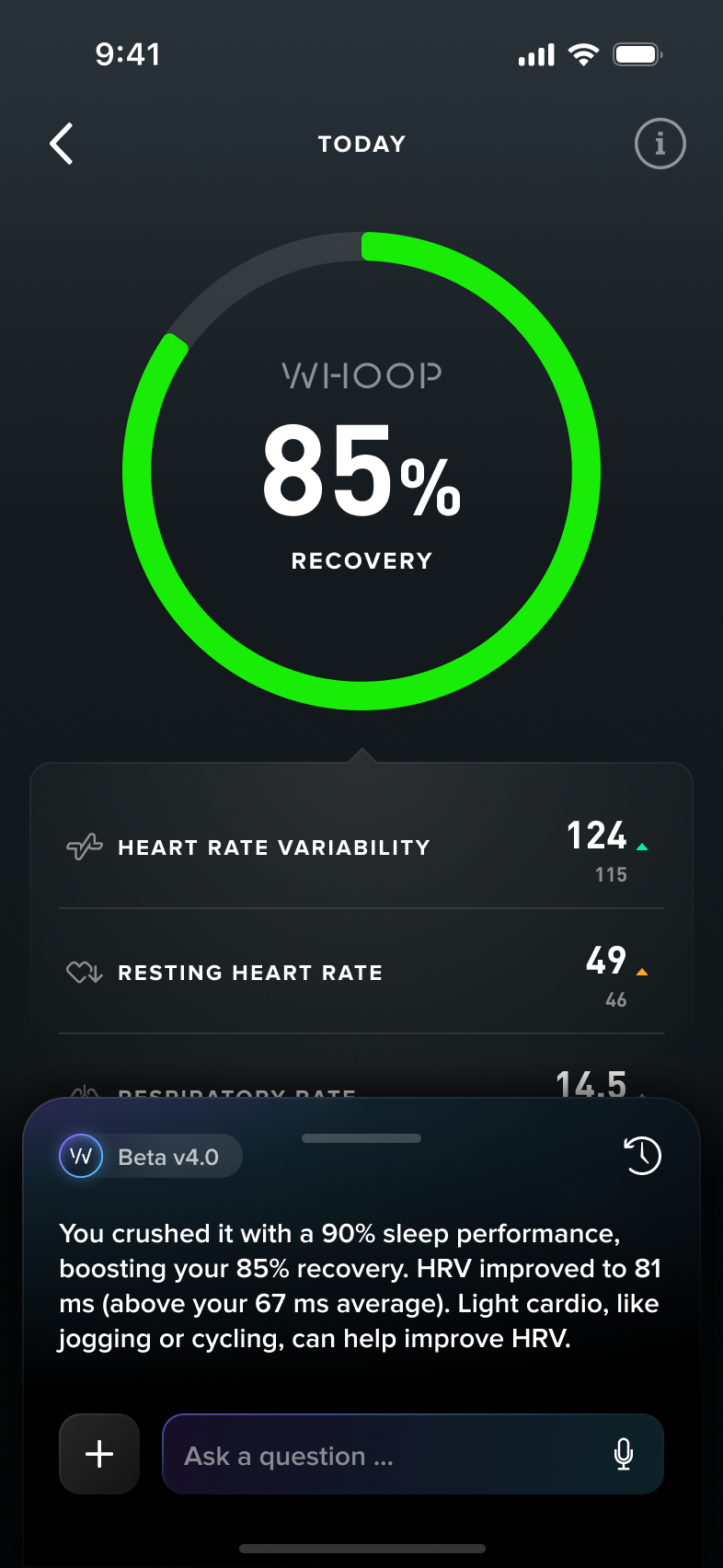
My first big area of work was on expanding AI across the app so that context-aware insights are available in more places where members make decisions about training and recovery. On the backend, that meant building structured context about what is being viewed, such as an activity summary, daily status, or a long-term trends page, so WHOOP can surface insights relevant to that type of information. What surprised me was how much nuance there is in “context.” It is not just knowing that a member is looking at a particular screen; it is understanding what they are trying to get out of that moment. Are they checking on their overall status for the day? Are they reviewing a recent activity? Are they exploring long-term trends? The reason this matters is that each of these moments calls for a different style of insight. Designing for that meant thinking deeply about relevance, timing, and tone, and that is what makes contextual intelligence an interesting engineering problem, it has to feel naturally embedded, not bolted on. When we model that context well, the intelligence feels natural, timely, and relevant. When we do not, it feels random or distracting. That was my first big lesson: the visible AI is only as good as the invisible framing behind it.
Onboarding: Designing the “First Hello”
My second major project focused on onboarding for WHOOP, an experience that introduces new members to what AI can do and helps it understand what they want out of WHOOP. On the backend, I helped design and implement a new model to support a flexible, step-by-step onboarding flow. It needed to handle things like multiple lines of explanatory text and steps that can progress automatically. All of it comes together to create a smoother introduction, giving members guidance instead of starting them in an empty conversation with WHOOP. What I appreciated most was how personal the work felt. The words, pacing, and structure all matter because they set expectations for how supportive, approachable, and reliable WHOOP feels over time. It taught me that onboarding is not just a UI flow, it is a relationship-building moment.
Post-Activity Intelligence: Turning Effort Into Insight
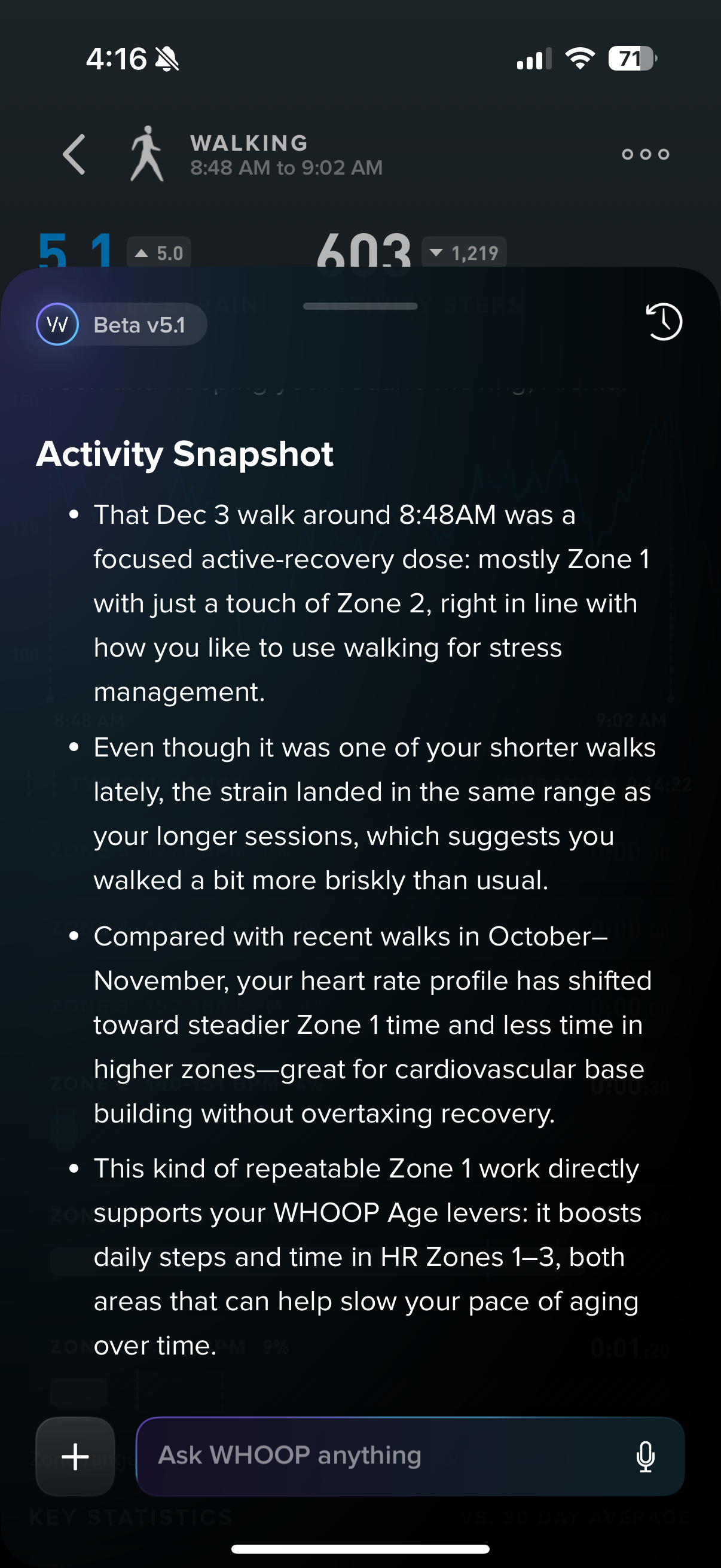
My final major project focused on AI-generated activity insights that help contextualize cardio and strength training workouts. The idea is simple: after one of these workouts, WHOOP can offer a reflection that helps explain what that effort means in the broader context of training load, recovery, and goals. From the outside, it can look like a few lines of text beneath an activity summary. Under the hood, there is a lot going on: deciding when to surface something, how to phrase it, and how to make it feel supportive rather than repetitive. I worked on backend components that structure these interactions and make them measurable, including how quickly insights appear and how members engage with them over time. Working on this showed me how much intentionality goes into shaping AI moments that feel supportive rather than distracting. This project made AI feel less like a buzzword and more like a craft, one built on balancing timing, tone, and intention.
How This Co-op Changed How I Build
Across these projects, a few themes kept coming up for me:
- AI needs to feel like a guide, not a gimmick: The best moments were the ones that fit naturally into a member’s existing habits.
- Context is everything: An insight is only meaningful if it reaches members at the right time and in the right setting.
- Small details shape the entire experience: The smallest choices around tone, timing, and structure often made the biggest difference in how helpful an insight felt.
- Iteration is where real progress happens: Every feature evolved through feedback, testing, and refinement, and that process shaped how I now think about building AI experiences.
- Building at WHOOP means building with intention: Every decision, big or small, comes back to helping members better understand themselves.
I came to WHOOP wanting to work on AI. I am leaving with a deeper understanding of what it means to build AI experiences that truly serve people and stay grounded in thoughtful, intentional, and secure design, a lesson that will influence every project I take on next and renew my excitement for the kind of work that makes a real impact.